If you’ve spent any time around worksites, schools or regional businesses, you already know that no one ever says, ‘We’ve got too much space and too much time.’ Most of the time, the problem is the opposite. You need a room now, not in six months. You need a gatehouse that can move with the job, extra classrooms or offices that actually suit the way people work.
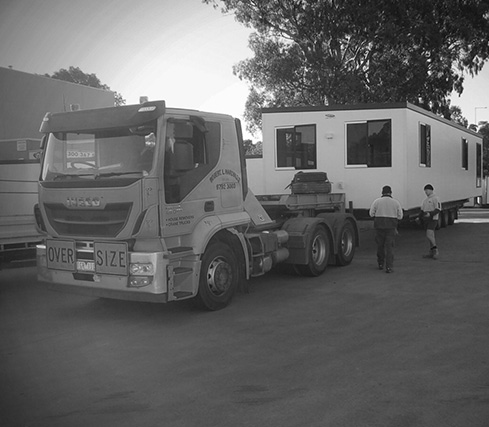
That’s where portable buildings earn their keep. A lot of people still think of them as basic site sheds, but that’s a pretty outdated view. These days, portable buildings can be fitted out to feel like a proper workspace, not a temporary afterthought, and in the right setting, that flexibility is worth a lot more than people realise.
The best thing about portable buildings is that they’re not locked into one use.
We’ve seen buildings used as everything from reception areas to first aid rooms, and the layout usually comes down to what the business actually needs on the ground.
Depending on the job, a portable building might be set up as:
Reception areas
Storage facilities
Offices
Office complexes
The real advantage is that you’re not starting from scratch every time your needs change. If the project moves, the building can move. If the team grows, the building can often be expanded or reconfigured. That kind of flexibility is hard to beat when you’re trying to keep a business moving.
A site office is where toolbox talks happen, where drawings get reviewed, where paperwork gets signed off and where the day gets planned. On a busy site, a portable site office gives supervisors and project managers somewhere practical to work without being dragged away from the action every five minutes.
A good site office requires a proper desk setup, power points in the right places, data connections for laptops and printers, air conditioning and lockable storage.
When the job wraps up, you’re not left with a permanent structure sitting there doing nothing. The building can be moved to the next site and put straight back to work.
Schools are a good example of why flexibility matters. Enrolments don’t always follow a neat pattern. One year a school is fine, the next year there’s a sudden jump in numbers and classrooms are stretched thin. Waiting on a permanent build can take ages, and that’s not much help when students need space now.
That’s why portable classrooms and admin buildings are so common in education. They give schools a way to add space quickly without turning the whole campus into a construction zone.
The practical side is just as important as the speed. Schools need buildings that are safe, comfortable and easy to access, with things like good lighting, ventilation and layouts that suit students and staff. When enrolments shift again, those buildings can often be moved or repurposed instead of being left underused.
No two businesses use space in exactly the same way. A site office for a civil contractor is going to look very different from a classroom or a medical room, and the fit-out should reflect that.
Depending on the application, you might need:
Air conditioning/heating
Kitchenettes
Bathrooms
Electrical and data connections
Security features
Internal partitions
That’s the whole point of flexibility. Instead of forcing your team to work around a generic layout, the building is set up to support the way your business already operates.
Speed is one of the main reasons people choose portable buildings.
Traditional construction takes time. Portable buildings cut a lot of that out because most of the work happens off-site.
While the building is being manufactured, the site can be prepared at the same time. That means installation can happen much faster once everything is ready.
For businesses that are under pressure to get moving, that can be the difference between staying on schedule and falling behind before the job has even started.
Flexibility can also make a lot of financial sense. If you build something permanent for a temporary need, you’re tying up money in a structure that may not suit you later. Portable buildings give you a different option. You can invest in something that works now and still has value when your needs change.
That might mean:
Moving the building to a new site
Reusing it for a different department
Expanding it as the business grows
Repurposing it for another industry or application
That kind of adaptability helps businesses get more out of their investment and avoid paying for space they don’t actually need.
Portable buildings aren’t just a temporary fix anymore. In the right hands, they’re a smart, practical way to create usable space without the delays and cost of a permanent build. Having a building that can adapt with you is a serious advantage.
To find out more about portable buildings and how they can help you, contact the team at Nova Portable Buildings online now or call 1300 367 511.